Private 5G for High-Density Device Environments

By Challenge

Thousands of Devices. One Network That Doesn't Flinch.

Wi-Fi contention is not a fixable problem it's a design limitation. When thousands of IoT sensors, wearables, scanners, and connected machines share the same spectrum, performance degrades and devices drop. Adding more access points makes the interference worse. The only real answer is a network architecture built for density from the ground up.

NEW TO PRIVATE 5G?

Private 5G is a private cellular network you own and operate on your own site. It runs on CBRS: shared 3.5 GHz spectrum the FCC opened for enterprise use, with no carrier subscription and no spectrum license to buy. The result is carrier-grade coverage, security, and reliability under your control.

How It Works
The Problem

More Devices, Less Performance

Wi-Fi uses a contention-based access model devices compete for airtime on shared channels. In a conference room with ten laptops, this works fine. In a factory with 800 IoT sensors, 200 wearables, 50 AGVs, and a guest network running simultaneously, the math doesn't work. Devices back off, retry, and back off again. Latency spikes. Critical telemetry gets delayed. Sensors miss their reporting windows

The Answer

Scheduled Access, Not Contention

LG Private 5G uses a scheduled access model based on 3GPP standards. The network allocates time and frequency resources to devices devices don't compete, they wait for their assigned slot. Performance doesn't degrade as device count increases; the scheduler simply allocates more precisely.


Wi-Fi vs. Private 5G

How They Handle Device Density

WI-FI

  • Contention-based: devices compete for airtime, so more devices means more collisions.
  • Adding access points to handle the load adds interference, not capacity.
  • Latency spikes and telemetry drops when the network gets busy.

LG PRIVATE 5G

  • Scheduled access: the network assigns each device a slot, so performance holds as device counts climb.
  • Scales from hundreds to 20,000 devices on the same architecture.
  • Consistent performance whether 50 or 5,000 devices are connected.

Use Cases

Where Density Creates the Hardest Problems

These environments push device density beyond what shared-spectrum infrastructure can reliably serve.

Warehousing & Logistics

See Every Pallet, Cart, and Asset

Learn more
Warehousing & Logistics

See Every Pallet, Cart, and Asset

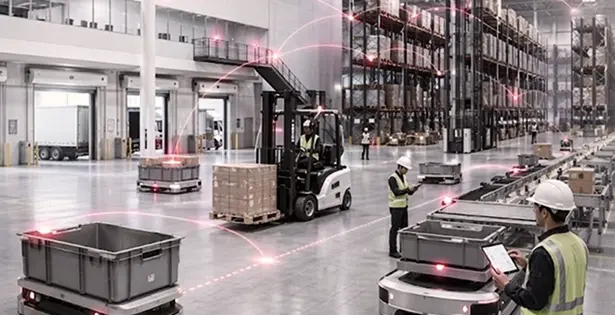
Operators lose hours hunting for pallets, totes, carts, and tooling, and lost assets get bought twice. Dense RFID, tag, and sensor tracking over Private 5G gives continuous location across the floor, cold storage, and outdoor yard, indoors and out. Inventory and the WMS reflect where things actually are, not where they were last scanned 30 minutes ago.

Healthcare

Stop Losing Time Hunting for Equipment

Learn more
Healthcare

Stop Losing Time Hunting for Equipment

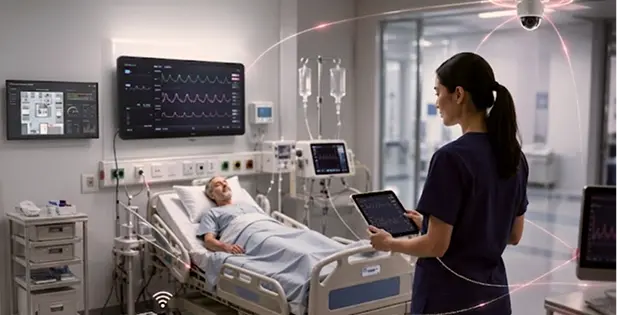
Infusion pumps, portable monitors, and ultrasound carts move between wards all day, and staff spend real clinical time looking for them. Thousands of tags reporting at once is exactly the load that shared spectrum drops, and a dedicated network keeps every one of them reporting so the location board stays trustworthy.

Ports & Maritime

Know Where Every Container Sits

Learn more
Ports & Maritime

Know Where Every Container Sits

A terminal tracks containers, chassis, reefer plugs, and handling equipment across open ground where access points cannot reach. Thousands of tags and telematics units report at once, and one outdoor-rated network carries all of them from quay to gate without a separate system per zone.

Airports

Keep Bags and Cargo Moving Below the Terminal

Learn more
Airports

Keep Bags and Cargo Moving Below the Terminal

Baggage handling, ground support equipment, and cargo tracking all run in the same congested airside spectrum, alongside tens of thousands of passenger devices overhead. Licensed-priority spectrum keeps operational traffic clear of that crowd, so scanners and vehicle terminals do not slow down at peak.

Oil & Gas

Catch Equipment Faults Before They Cost a Day of Production

Learn more
Oil & Gas

Catch Equipment Faults Before They Cost a Day of Production

Vibration, pressure, and gas sensors across a plant only earn their keep if every one of them reports on schedule. Scheduled access means the thousandth sensor gets the same treatment as the first, so a developing fault shows up in the trend instead of in an unplanned shutdown.

Venues & Stadiums

Keep Fans Buying When the Building Is at Capacity

Learn more
Venues & Stadiums

Keep Fans Buying When the Building Is at Capacity

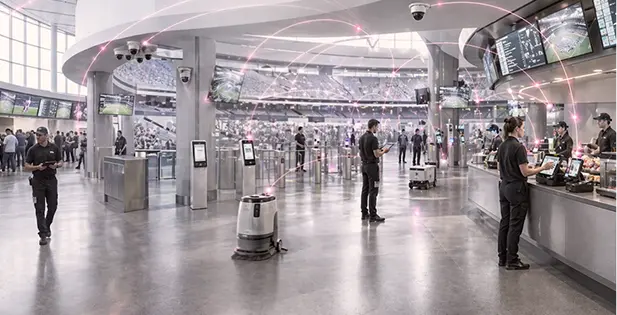
Point-of-sale terminals, ticket scanners, and handheld ordering devices all need to work in the one hour when the building is full and the public bands are saturated. Operational devices run on their own network here, so a sold-out crowd does not take the concessions line down with it.


Why LG Private 5G

Built for Device Density at Scale

Scheduled vs. Contention Access

3GPP scheduling allocates radio resources to devices rather than having them compete. Performance is predictable at 50 devices or 2,000 devices the scheduler adapts, not the device population.

Scalable Architecture

UltraSlim handles up to 512 simultaneous connections. UltraMax scales to 20,000. Both use the same vCore and PTMS management layer, so scaling up is a hardware addition, not a network redesign.

Dedicated Spectrum

CBRS Band 48 gives LG Private 5G its own licensed-priority spectrum, separate from the unlicensed 2.4/5/6 GHz bands where Wi-Fi, Bluetooth, and consumer devices compete for airtime. Device density on the LG network doesn't affect anything else, and nothing else affects the LG network.

Built for What's Next

Device Counts Only Go One Direction

Every year, more sensors, more automation, more connected equipment. The network you deploy today needs headroom for the device populations of 2028. LG Private 5G's architecture doesn't require a forklift upgrade when you add the next 200 devices it was designed with that growth in mind.

Explore UltraMax for Large Deployments