
Private 5G for Healthcare
By Industry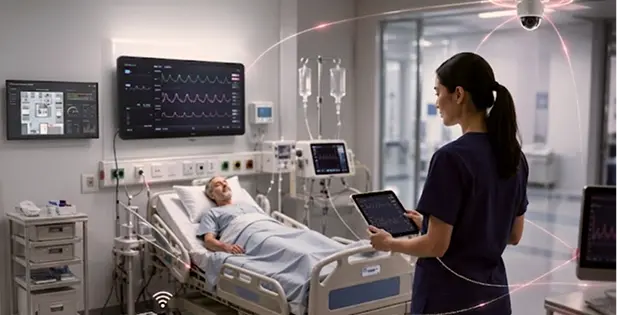
A Dead Zone Shouldn't Be What Delays a Response
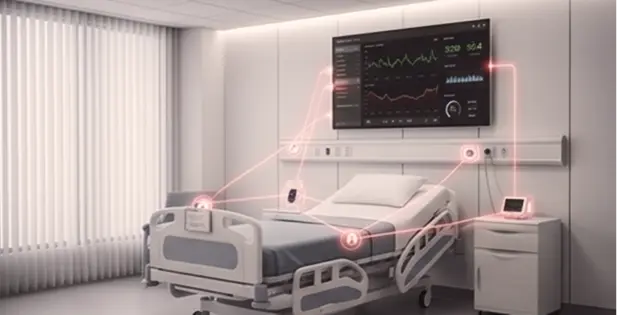
In a hospital, caring for a patient is a constant act of communication. Vitals stream from bedside monitors, alarms route to the right nurse, medications are scanned and verified, and care teams reach each other in seconds, all of it over wireless, in motion, around the clock. When that communication holds, care moves. When it drops in a dead zone, the cost isn't a slow download; it's a delayed response, a missed alert, or a clinician pulled away from a patient to chase a workaround. LG Private 5G carries clinical communication on one dedicated, deterministic network wherever care happens, so the network is never the reason care waits.
The Challenge
The Network Stopped Being IT. It Became Part of Care.
Communication used to sit in the background of clinical work. Now it runs through every step of it: monitoring, medication, coordination, documentation, and response. The devices that carry it move with the patient and the care team, across floors and into spaces that change by the hour, and there are more of them every year: a typical hospital now runs 10 to 15 connected medical devices per bed, roughly 15,000 in a 1,000-bed system. Best-effort wireless was never built to guarantee that kind of communication in a steel-and-concrete building full of interference, and in care delivery an intermittent connection isn't an inconvenience. It's a clinical risk.
- Carts, handhelds, and devices that roam every floor
Seamless mobilityHandover with no gaps, room to room
- Alerts, telemetry, and clinical comms that can't wait
Deterministic low latencypredictable response, not best-effort
- More connected endpoints per bed every refresh cycle
Massive device densityadd endpoints without adding cable
- PHI kept off general and guest traffic
Network slicingclinical, admin, and guest in separate lanes
- Only provisioned clinical devices on the network
SIM-based authenticationno shared passwords, no rogue devices
Why LG
We Already Work Inside Hospitals
LG doesn't arrive in healthcare as a network vendor learning the environment on your floor. LG displays are already standard equipment in many hospitals, from patient-room TVs and public-area signage to wayfinding, nurse-station monitors, and medical-grade displays. That footprint is why we know firsthand what it takes to deploy in an active care setting: infection control, clinical coordination, and the rule that nothing is allowed to disrupt patient care. It also means the displays and the private network behind them can come from a single partner.
Use Cases
Where LG Private 5G Makes a Difference
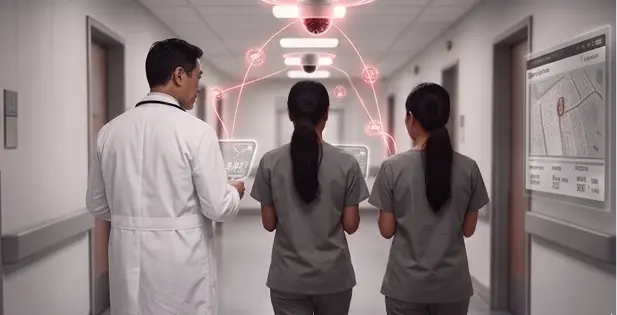
Keep Clinical Teams Connected on the Move
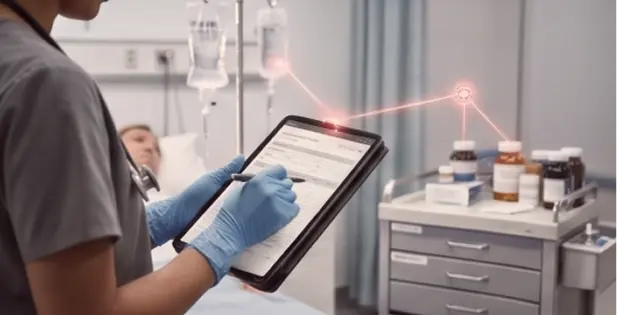
Make Bedside Documentation and Med Workflows Reliable
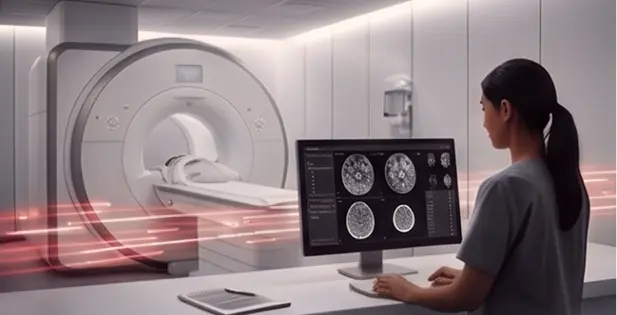
Move Imaging and Diagnostics in Real Time
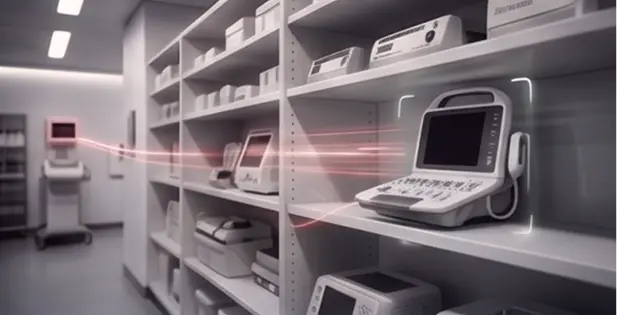
Stop Losing Time Hunting for Equipment

Keep PHI Isolated and Audit-Ready
Real-Time Decisions
When Software Watches the Patient, the Data Has to Arrive
More of what keeps patients safe now runs on continuous data: early-warning scores trending toward deterioration, telemetry feeding an alert, AI tools flagging a study for a clinician's eyes. None of it works if the data doesn't arrive. When a best-effort network drops telemetry or delays an alert, the system doesn't pause and wait. It acts on a gap, and the warning that should have come early comes late. A dedicated network isn't just about uptime. It's about whether the tools watching your patients are working from data you can trust.
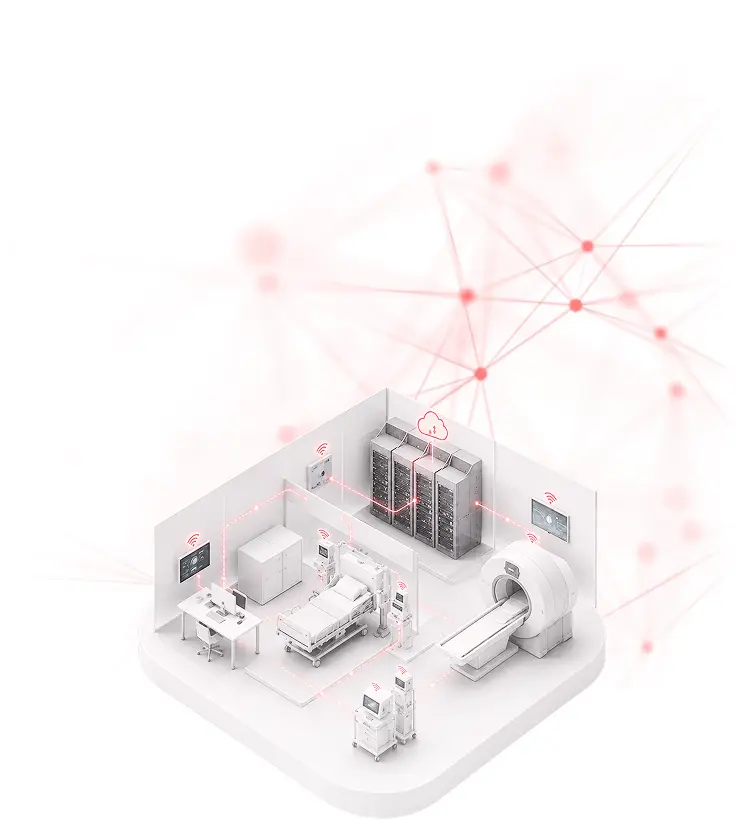
The Infrastructure Reality
Key Outcomes
Wiring work within a hospital is a lengthy process, involving opening the ceiling, undergoing infection control reviews, shutting down medical services, and finally obtaining approval.
LG Private 5G doesn't eliminate every cable in the building. It gives hospitals another option for the endpoints that move, change, or sit in hard-to-wire spaces, so connecting them doesn't mean reopening the ceiling each time.
Key Outcomes
What Health Systems See After Deployment
- Fewer cable pulls, ceiling entries, and infection-control events every time the environment changes
- Mobile clinical teams that stay connected room to room, with fewer manual workarounds
- More reliable bedside scanning and documentation, with fewer retries and exceptions
- Less clinical staff time lost locating equipment, and better utilization of what's owned
- Temporary and surge spaces stood up in hours instead of waiting on a wiring project
The Device Ecosystem Is Already Moving
The Clinical Devices You Buy Next Are Built for This
You don't have to replace what you own to start. Purpose-built healthcare devices increasingly ship CBRS-ready, and the equipment that isn't can join the private network through a gateway. The network you deploy today gets more useful with every refresh cycle, not less.
Purpose-Built Healthcare Mobile Computers

Healthcare-grade mobile computers and handhelds are built for clinical communication, barcode scanning, and medication workflows, and more of them ship 5G- and CBRS-ready with every generation. SIM-based authentication replaces credential management for devices that move continuously through the facility.
Tablets, Phones & Rugged Handhelds

Clinical tablets, managed phones and tablets, rugged handhelds, and rugged Windows tablets cover bedside documentation, rounding, pharmacy, lab, and materials management. A growing share of these models carry Band 48 / n48 CBRS support for private networks.
Adapt What You Already Own

Ethernet- or Wi-Fi-only carts, displays, cameras, kiosks, and diagnostic systems join the private network through a CBRS gateway or router, with no endpoint replacement required. It's the practical path for the equipment that's expensive to swap but painful to re-cable.
Device compatibility depends on the exact model, firmware, and SIM or eSIM configuration, so your LG team validates your specific fleet before deployment. Anything that isn't natively CBRS-capable can still connect through a bridging gateway.