
Private 5G for Reliable Mobility

By Challenge

Your Devices Move. Your Network Has to Keep Up.

Coverage gaps and handover failures are a real operational cost. Mobile devices lose connectivity mid-task. Workers lose contact in dead zones. Operations that span large or complex environments fall back to shared infrastructure that wasn't built for them. Wi-Fi was designed for stationary users in offices, not for devices and people that need consistent connectivity wherever the work actually happens.

NEW TO PRIVATE 5G?

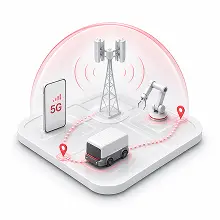
Private 5G is a private cellular network you own and operate on your own site. It runs on CBRS: shared 3.5 GHz spectrum the FCC opened for enterprise use, with no carrier subscription and no spectrum license to buy. The result is carrier-grade coverage, security, and reliability under your control.

How It Works
The Problem

Seamless Mobility Is Not a Wi-Fi Strength

Wi-Fi handover between access points introduce latency spikes and brief disconnections tolerable for a laptop user checking email, not acceptable for an autonomous vehicle mid-cycle or a safety-critical control loop. Add multipath interference from metal structures, equipment, and moving inventory, and you have an infrastructure that works in ideal conditions and fails in real ones.

The Answer

Private 5G Was Built for This

LG Private 5G uses licensed-style CBRS spectrum and a 3GPP-compliant core to deliver the kind of seamless mobility that Wi-Fi cannot. Handover between radio units are handled at the network level devices stay connected and in-session as they move through the facility, across the yard, or between buildings.


Wi-Fi vs. Private 5G

How They Handle Devices in Motion

WI-FI

  • Access-point handover drop the connection for a moment, fine for a laptop, not for a robot mid-cycle.
  • Coverage stops where the access points stop; outdoor and inter-building areas need a separate network.
  • Shares the crowded unlicensed bands with every other device in range.

LG PRIVATE 5G

  • 3GPP network-level handover keep devices connected and in-session as they move through the facility.
  • One network covers indoor, outdoor, and between buildings under a single management plane.
  • Runs on licensed-priority CBRS spectrum, clear of Wi-Fi and Bluetooth contention.

Use Cases

Where Mobility Matters Most

These use cases depend on continuous, reliable connectivity for devices in motion.

Manufacturing

Keep AMR Fleets Moving

Learn more
Manufacturing

Keep AMR Fleets Moving

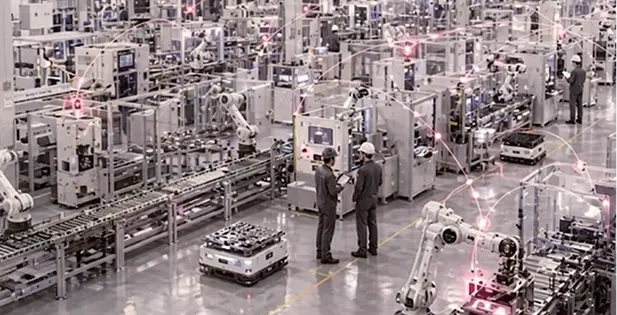
One dropped connection sends an AMR off-path and can stall an entire route. Deterministic low latency and seamless hando hold AGVs and AMRs on-path at full speed with no dead zones. In a live production deployment, Private 5G logged 1 communication-loss event over 8 weeks against 1,055 on Wi-Fi.

Healthcare

Keep Clinical Teams Connected on the Move

Learn more
Healthcare

Keep Clinical Teams Connected on the Move

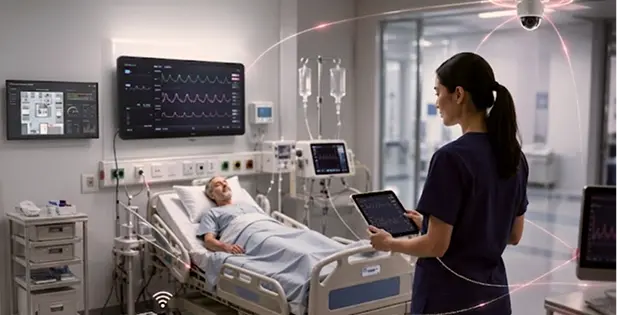
Carts, monitors, and handhelds follow the patient between wards, imaging, and theatre. Network-level handover keep those sessions alive across the whole building, so records and vitals don't stall at a floor boundary.

Ports & Maritime

Keep Autonomous and Yard Vehicles in Motion

Learn more
Ports & Maritime

Keep Autonomous and Yard Vehicles in Motion

Straddle carriers, yard trucks, and cranes work across open ground where access points can't reach. One outdoor-rated network holds the control and telematics links from quay to gate without a separate system per zone.

Airports

Keep the Aircraft Turn on Schedule

Learn more
Airports

Keep the Aircraft Turn on Schedule

A turn runs on ground crews, tugs, loaders, and fuel bowsers moving across an apron that no indoor network covers. Continuous connectivity across stands and airside roads keeps every step of the turn reported in real time.

Oil & Gas

Keep Upstream Production Flowing Across Remote Sites

Learn more
Oil & Gas

Keep Upstream Production Flowing Across Remote Sites

Inspection robots, drones, and roving technicians cover ground measured in square kilometres, much of it beyond any wired drop. One network that reaches across the site keeps telemetry and video flowing while people and machines keep moving.

Campus & University

Keep Coverage Continuous Across Every Building and Outdoor Space

Learn more
Campus & University

Keep Coverage Continuous Across Every Building and Outdoor Space

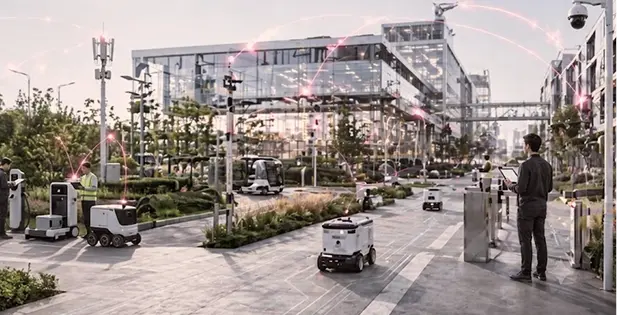
A campus is dozens of buildings, walkways, and open ground stitched together from separate networks. Shuttles, delivery robots, facilities crews, and security move between all of them, and one network under one policy follows them the whole way.


Why LG Private 5G

The Technical Reasons Mobility Works

3GPP Handover Architecture

LG Private 5G implements 3GPP Release 16+ handover procedures the same standards that make public 5G work at highway speeds. Devices transition between radio units without session interruption, at any movement speed typical in industrial and campus environments.

CBRS Spectrum Advantage

Operating in licensed-priority CBRS spectrum (Band 48) means LG Private 5G isn't competing with Wi-Fi, Bluetooth, or other shared-spectrum devices for airtime. Your mobile devices get consistent access to clean spectrum regardless of the RF environment around them.

Unified Indoor/Outdoor Coverage

LG radio units are available in indoor and outdoor form factors, all managed from the same core. The network doesn't change character when a device crosses the building perimeter coverage, latency, and security policy follow the device wherever it goes.

Built for What's Next

The Floor Plan Won't Hold Still

For decades, the equipment that mattered most sat where the cable reached. That's reversing. Production cells get reconfigured between runs, mobile manipulators and diagnostic carts move to the work instead of the other way around, and portable imaging follows the patient. As equipment cuts loose from its wiring, the floor plan itself becomes fluid, and a network anchored to fixed drops and fixed access-point placement becomes the constraint. LG Private 5G is built on open standards, uses network slicing to carry new applications as they emerge, and scales from dozens to thousands of connected devices without replatforming, so the network bends with your layout instead of locking it in place.

See the Technology